Which do you use?
Showing posts with label music. Show all posts
Thursday, 18 April 2013
How do you teach English?
Kaplan surveyed more than 500 ESL teachers from around the world to discover what tools they use to enhance their lessons. Here's an infographic they created to show the results.
Which do you use?
Which do you use?
Labels:
games,
grammar,
infographic,
lesson plans,
movies,
music,
survey,
tenses,
video
Thursday, 24 November 2011
Stand By Me, Japan
This is a good an excuse as any to listen to a good song, and, at the same time, be reminded of the suffering the great nation had to endure earlier this year.
Why not use this video as a springboard for a class discussion on natural disasters, for example?
You might like to read this post on activities using songs.
Thursday, 29 September 2011
Truth or Lie: Activity for any classroom
I recently responded to a blog challenge by a video recording of myself - you can see it by clicking here. Most EFL teachers are probably aware of the activity where students are asked to say some things about themselves, and the others are to guess if they're true or false.
I suggested taking this a step further and have the students bring video recordings of themselves saying those things.
But, you can take it yet another step further. Although this activity is popular in the EFL classroom, there's no reason why it can't be used in the other classes, too. The topic doesn't need to be personal; it could be on anything. Examples:
- What is a tangent, or an apex? (Geometry/Art)
- They could describe an animal or an ecosystem. (Science)
- They could talk about the rules of rugby. (PE)
- They could talk about countries, or climate. (Geography)
As you can see, the limit is the extent of your imagination! Try it and let us know!
Labels:
activities,
animals,
art,
basic,
CLIL,
conversation,
elementary,
geography,
grammar,
history,
intermediate,
lesson plans,
maths,
music,
PE,
Science,
speaking,
sports,
video
Monday, 13 June 2011
Sheltering Change, more ideas for your lessons
I've always loved this song (written by Jagger/Richards, and released on the Stones' Let It Bleed album towards the end of 1969), and, as you probably already know, I'm very fond of Playing for Change, too. They are good enough reasons for me to link it here in this blog.
But how can we use it in our lessons, you might ask. Well, think about it and tell me!
I can think of numerous ideas - I'll just give you a few clues.
Before you even start playing the song, look at the title, 'Playing for Change'. What is change? What does playing for change mean? What does this organisation stand for? How did it start?
Then, the title of the song, 'Gimme shelter'. What's 'gimme'? What's shelter? What collocations can you think of? What do you think the song is about?
There is also the caption: It is in the shelter of each other that the people live
Have you heard of it? It's an Irish proverb. What do you think the 'shelter' here refers to? Why the definite article in 'the people'?
Finally, make sure they know what 'sign up' and 'mailing list' are.
So, even before you play the song, there's enough material for a whole lesson, depending on your class.
So, you've played the song; you've rocked the building, the DOS has come to see what's going on..., now what do you do?
Where were the musicians from? Can you name the country and nationality? How many instruments appeared in the video? How many can you name? Webquest: find out the names of those you don't know. Which instrument did you like best? Which performer? Which singer?
Diagnose the lyrics. Focus on phrases such as:
- a storm is threat'ning my very life today
- I'm gonna fade away
- It's such a shot away
- the whole of the third verse
The whole song is very metaphoric. Elicit interpretation. Elicit more examples. Get them to write more verses in groups. Choose the best.
More stuff you can use:
Related posts:
Friday, 29 April 2011
"When you educate a girl, you educate the whole world"
In January 2011, I posted a video showing how they were building a music school in Kirina, Mali, from scratch. The school opened its doors in October 2010, and Playing for Change takes us into the school to see what teachers and the kids do...
Related posts:
Sunday, 17 April 2011
Jackson Browne on Ted Talks: If I Could Be Anywhere
Ted Talks has a speaker with a difference - he isn't going to speak!
Don't worry - it isn't a silent video, lol.
Jackson Browne is one of my favourite singer-songwriters, and he has written many powerful songs in his long career, this one here being no exception. What I would like you to do first is to watch and listen to the song, and try to understand as much as possible.
Then, watch it a second time; this time, scroll further down and follow the lyrics.
When you've finished, think about the message Jackson Browne is trying to put across. Comment below by clicking on the pencil icon.
Sliding through the shimmering surface between two worlds
Standing at the centre of time as it uncurls
Cutting through a veil of illusion
Moving beyond past conclusions
Wondering if all my doubt and confusion will clear
If I could be anywhere,
If I could be anywhere
If I could be anywhere right now, I would want to be here
Searching for the future among the things we're throwing away
Trying to see the world through the junk we produce every day
They say nothing lasts forever,
But all the plastic ever made is still here
No amount of closing our eyes will make it disappear
If I could be anywhere,
If I could be anywhere
If I could be anywhere in history, I would want to be here
The Romans, the Spanish, the British, the Dutch
American exceptionalism, so out of touch
The folly of empire, repeating its course
Imposing its will and ruling by force
On and on through time
But the world can’t take it, very much longer
We're not gonna make it, unless we're smarter and stronger
The world is gonna shake itself free of our greed somehow
If I could be anywhere,
If I could be anywhere in time
If I could be anywhere and change things, it would have to be now.
They say nothing lasts forever,
but all the plastic ever made is still here
No amount of closing our eyes will make it disappear
And the world can’t take it, very much longer
It's not gonna make it, ‘less we're smarter and stronger
The world is gonna shake itself free of our greed somehow
And the world can’t take it, that you can see
If the oceans don’t make it, neither will we
The world is gonna shake itself all the way free somehow
If I could be anywhere, If I could be anywhere in time
If I could be anywhere and change the outcome, it would have to be now.
Related posts:
We are the champions - Ideas for using songs in the classroom
A day in the life (The Beatles)
Conditional Type II with Norah Jones
Conditional Type II - Comparing countries
Conditional Type III with Keith Whitley
Labels:
activities,
CLIL,
conditionals,
conversation,
debate,
grammar,
intermediate,
listening skills,
music,
speaking,
video,
writing
Wednesday, 13 April 2011
A Day In The Life: One Song, Countless Activities: Simple Past Cloze, Phrasal verbs, Vocabulary, etc.
In We Are The Champions, I wrote about several ideas you could do with songs in the classroom, so if you'd missed it, you ought to take a look now.
Warm-up
Play the video, freeze it when Paul McCartney can be seen. Ask if anyone knows him, what they know: the group he belonged to, the instrument he plays, the period the song was written, etc.
Gap-fill
Play the video once, asking them to listen and, at the same time, watch the images carefully. Then, ask them what images they remember seeing, and if the images suggested anything to them.
Before playing a second time, get them to try the gap-fill activity, without asking for help. Remind them that each time they ask for help (?) or a hint, they lose points.
Phrasal Verbs
Once the gap-fill activity has been successfully completed, explain these phrasal verbs to them (after asking them to guess first):
blow out
turn away
turn on
wake up
get out
look up
As most phrasal verbs have multiple meanings, it's best to stick to what they mean in the context of the song, in order not to overly confuse the students.
blow out: the 'blow' here means to break into pieces and the 'out' gives a sense of outward direction.
The gas explosion blew out all the windows of the house.
There may be no need to draw attention to the graphic imagery of 'he blew his mind out', but you could perhaps ask how he could have done this (answer: by shooting himself). However, if you want to go deeper, John could have been cheeky with his typical double entendre, and meant that the driver was stoned out of his head!
turn away: although 'turn away' is a phrasal verb meaning to refuse to allow someone into a place, here it isn't used as a phrasal verb as such. 'Away' is used as an adverb meaning towards a different direction.
'A crowd of people turned away' meaning if they were looking at the screen, they stopped looking at it by looking at a different direction.
turn on: mmm...this is a tricky one as one of the meanings has a sexual connotation, even a drug-related one perhaps. What was John thinking of when he wrote it? Depending on the age group of your students, you may wish to explain that it means 'getting someone interested in something'.
wake up: wake or wake up means to stop sleeping.
get out: to get out of bed is to leave the bed, especially after sleeping.
look up: As in 'turn away', the 'up' is used as an adverb to mean towards a higher direction.
'And looking up, I noticed I was late': remembering that he's gone downstairs to have a cup (of tea, probably) (you could also ask them about rooms in the house - he'd obviously went down to the kitchen from his bedroom upstairs), he could be looking back up the stairs, but more likely, he was looking up at a clock on the wall, and saw that he was late.
Analysis and interpretation
One could write a doctorate on this song, really! There are many aspects that can be discussed depending on the level and the age group of your students. You can analyse each line and draw multitudes of hidden layers behind John's irony and sarcasm. You can talk about subjects such as urban life, suicide, drug abuse, fame, politics, and so on. Whether he meant it intentionally or not, there is so much to be read behind John's words (and you could guess which were John's words and which were Paul's).
To put it in a nutshell, discuss the lyrics in class. Ask them for their personal interpretation (or work in groups). Compare interpretations. As homework, set a group webquest - ask them to find out interesting things about the song and prepare a presentation (leave the choice to them: could be PowerPoint, Prezi, Glogster, Vocaroo, Wallwisher, well, whatever tickles their fancy!)
You can also ask them to add another verse based on a piece of news they have read in the newspapers or heard on the TV.
I have also prepared a short quiz, testing rhymes, synonyms, antonyms and phrasal verbs. If you ask your students to enter your email, their results will be sent to you. Alternatively, if you make sure they enter valid references (such as class/school), ask me, and I'll forward their attempts to you.
Index of all Material by Category
We are the champions: Present Perfect activities
Conditional Type II with Norah Jones
Conditional Type III with Keith Whitley
Labels:
activities,
basic,
elementary,
games,
grammar,
intermediate,
listening skills,
music,
past simple,
video
Monday, 11 April 2011
One World - is it such an impossible dream?
"The next thing we knew the music started playing, children gathered for their own personal concert, and we all transcended to a place with no time, no fear, and no difference between us." And so, we watched, mesmerised by Mali's Tinariwen's desert blues, reminiscent of the late great Ali Farka Touré.
Boy, do I love this music. These are the roots of American blues, which, in turn, are the roots of most forms of popular music today.
So, just chill out, watch, listen, dig out some Ali Farka, and dream of achieving the objective of Playing for Change: peace through music. Dream of One World.
View Larger Map
Related posts:
Building a school from the ground up
Sunday, 3 April 2011
We Are The Champions: One Song, Countless Activities: Present Perfect Cloze, Idioms, Vocabulary, etc.
A lot of teachers who use songs for ELT restrict themselves to a gap-fill activity plus a singalong, but there are, however, many other activities you could do besides those, some of which I've set out below, and I also created a quiz incorporating some of them.
Due to copyright problems, I'm not allowed to embed the video here, but click on the video image, and then, again, where it says 'Watch on YouTube", and it will bring you to the video in YouTube.
(Note: I just tried it again, and it played the video here without any problem. I won't remove the above warning just in case you get the copyright message.)
Watch the video once. Then, click on the second image to start the interactive cloze activity. Play the video a second time, and while it's playing, try to fill in the missing gaps.
When you've completed that, have a go at the quiz - just click on the third image below to start. Only the email is obligatory, but if you don't wish to enter yours, just give a fictitious one, e.g. a@a.com.
If you provide an email, the quiz robot automatically sends you your results, along with the correct answers.
Due to copyright problems, I'm not allowed to embed the video here, but click on the video image, and then, again, where it says 'Watch on YouTube", and it will bring you to the video in YouTube.
(Note: I just tried it again, and it played the video here without any problem. I won't remove the above warning just in case you get the copyright message.)
Watch the video once. Then, click on the second image to start the interactive cloze activity. Play the video a second time, and while it's playing, try to fill in the missing gaps.
When you've completed that, have a go at the quiz - just click on the third image below to start. Only the email is obligatory, but if you don't wish to enter yours, just give a fictitious one, e.g. a@a.com.
If you provide an email, the quiz robot automatically sends you your results, along with the correct answers.
Ideas for using songs in the classroom for teachers:
Speaking: Play the first few seconds of the song (without the video image). This is a famous song, so chances are that a fair few of the students will know it. Ask them. Ask them what they know: the group, the names of the band members, the song title, how often they have heard the song, where they have heard it, what it means to them, what they think the writer was writing about, etc.
Depending on the level of your students, this song could lead to all sorts of interesting discussions, such as AIDS, struggling artistes, bullying, sports in general, football in particular, success and failure, etc.
Fill-in-the-gap: If you're doing this as an offline activity, have them guess the missing words before they listen to the song.
Jumbled sentences: Cut up the lyrics into strips of phrases, and ask them to put them in the right sequence. Or, you can jumble the words of a bar and they correct them. You can just write the words on the board, or you can prepare a word cloud. Click here to see an example.
Synonyms/Opposites: Ask the meaning and/or opposites for: pay, do, bad, made, come, end, loser, bring, fortune, go, pleasure.
Idioms: This song is great for idioms:
pay one's dues: to earn a given right or position through hard work, long-term experience, or suffering
kick sand in someone's face: to be mean, to insult, to criticise, to bully
take a bow: to say of someone after they have achieved something special
not a bed of roses (usually negative): not easy, not pleasant or good, rough
Rhyming words: Select a word, e.g., 'call', and ask them to think of words which rhyme with it. You can set up a group competition, if you want.
As an extension of the above activity, ask them to invent another verse to add to the song.
Related posts:
Index of all Material by Category
Idioms
Jumbled Sentences: Present Perfect
Cockney Rhyming Slang
Rhyming Words
Word Clouds - 101 Ways of Using Wordle in the Classroom
Related posts:
Index of all Material by Category
Idioms
Jumbled Sentences: Present Perfect
Cockney Rhyming Slang
Rhyming Words
Word Clouds - 101 Ways of Using Wordle in the Classroom
Labels:
activities,
basic,
CLIL,
elementary,
grammar,
intermediate,
listening skills,
music,
present perfect,
tenses,
video
Thursday, 3 March 2011
Conditional Type 3 with Keith Whitley: Interactive Cloze Activity
Here's a simple fun activity for you to practise listening and conditionals.
First, listen to the song, and you can follow the lyrics if you want (there are some minor errors).
Then, click on the image below the lyrics, and this will direct you to an interactive cloze activity, prepared using Lucy Georges' Cloze Creator. Try to fill in the gap (with or without listening to the song again).
Tip: You can use the TAB key to move from one gap to the next.
When you've finished, answer these questions:
1. Under which genre would you classify this song?
2. What's your opinion of the song?
3. Did the singer love his lover 'all night long'? How do you know? How does he express this?
4. Is the singer still with his lover? How do you know?
5. Construct three sentences with a similar grammatical structure.
Thanks to Nik Peachey for telling us about Batlyrics.
Thursday, 24 February 2011
Conditional Type 2 with Norah Jones
Here's a simple beautiful song by the equally beautiful Norah Jones. Look at the word cloud - all the lyrics are there - and see if you can put the words in the order in which Norah sings. You can click on the image to see a larger version.
As you probably already know, we use the conditional sentence type 2 to talk about conditions that, although possible, are not likely to be fulfilled:
If I had an iPad, I would use it in class.
If I used it in class, I would create a commotion.
Once you've managed to get the lyrics, try to interpret the song. Do you like the song? Why/Why not? Who is she singing to? Does she need him? Have you ever felt that way?
For teachers, you can use this other activity to practise the second conditional, too.
Wednesday, 26 January 2011
Building a school from the ground up
I've been a long-time fan of Playing for Change, a fan of their music, a fan of their projects. Amidst the never-ending chaos in the world, it's always heartening to hear that someone somewhere is doing their bit to make the world a more tolerable place for future generations, to instil some hope in our children, the future leaders of our planet.
Thursday, 2 December 2010
The World's Best Countries: Games and Activities
If you had a choice of a country to live in, where would you choose? What would your criteria be?
Newsweek
recently compiled a list of the best countries in the world
based on health
, economy, politics and the quality of life. The project took them several months to complete, but their results are now available. Click on the image below to browse the scores and rank of the country of your choice, interactively.
Do you agree with the list?
This topic provides endless possibilities for classwork. You can have debates, web quests, conversations on food, culture, weather, etc., work on grammar points such as conditionals, and so on.
Below, I provide you with two point-and-click games: the first is on the geographical locations of the best 20 countries, and the second is one on their flags.
If you have any interesting ideas on how you can use this topic for your class, why don't you share it here with others?
You may also like these:
Flags of the World
Capitals of the World
Latitude & Longitude, explained
Places on Earth Quiz
Find these Cities
Countries & Nationalities
Wednesday, 6 October 2010
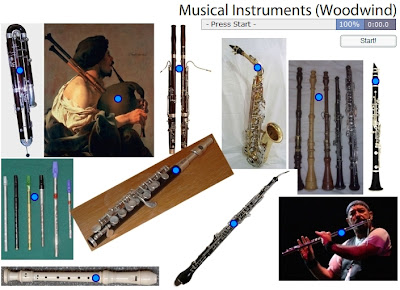
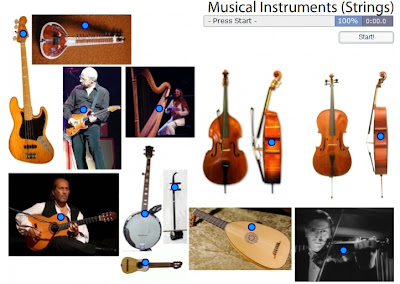
Musical Instruments Tagging Game (4 parts)
Here are some games to help you learn musical instruments. They are four categories: strings, brass & keyboard, percussion, and woodwind. Just click on the image to begin the game.
If you want to see your name appear on the scoring sheet, you'll have to register before playing. Remember your nickname & password for all my other games which are hosted on Purposegames.
Either way, please leave a comment, stating your score (percentage and time).
Other activities on music you may be interested in:
What type of instruments do they play?
Classify these musical instruments
What type of instruments do they play?
Classify these musical instruments
Labels:
activities,
basic,
CLIL,
elementary,
games,
intermediate,
lists,
music,
vocabulary
Monday, 12 October 2009
Ideas for Halloween in the classroom
Last updated 13 Oct 2009 20:45
In two weeks, Halloween is with us again. What have you got lined up for this year? Here are just a few ideas to help you get going.
To introduce/revise vocabulary related to Halloween, I've set up a PowerPoint presentation. Show the slide first, then elicit the word before revealing it. It's appropriate for basic level upwards. To display it properly, you'd need to download it. You may have to register with Scribd first.
To revise the vocabulary, do a miming activity. Show a picture to a student and she or he has to mime it for the others to guess the word. If you think the students already know the words, you can do the miming activity before showing the PowerPoint.
Halloween vocabulary To revise the vocabulary, do a miming activity. Show a picture to a student and she or he has to mime it for the others to guess the word. If you think the students already know the words, you can do the miming activity before showing the PowerPoint.
At the end of the vocabulary presentation, there are two activities which can be done independently:
Have a competition and see how many words the students can form from the word HALLOWEEN. You'd be surprised how many words are possible!
Then, ask them to think of all the words which can be associated with Halloween. Just like what I suggested in my odd one out post, you can accept practically any words. If they seem to be somewhat strange, ask them to explain the connection.
To introduce some tension in these activities, set a time limit, say of 5 minutes.
If you have a classroom projector, you can show them some videos. There are tons of Halloween-related videos you can find on the internet, but I've selected a few for you here. For the older or more advanced students, you can discuss the history of Halloween:
For the younger students, show them something more light-hearted:
To end the class, have a singalong with this monster hit!
Play them the karaoke version and have everyone join in! Unfortunately, they have disabled the option to embed, but here's the link:
If you don't like my ideas, try these sites:
abcteach
halloweenlinks
Have a harroween time!
Labels:
advanced,
basic,
elementary,
games,
Halloween,
intermediate,
lesson plans,
music,
powerpoint
Tuesday, 6 October 2009
Halloween Thriller! (PE - Body Expression)
Originally a Roman Catholic festival to celebrate the eve of All Saint's Day (1st Nov), Halloween has distorted over the years into a party time related to lighted pumpkins, fancy dress and anything to do with ghosts and horror.
As part of our lesson on body expression in PE, I would like you all to watch the Thriller video of the late Michael Jackson, even though I know all of you must have seen it lots of times. I want you to observe the movements of all the dancers, and the idea is not so much for you to copy their movements but for you to invent some of your own. Remember, you have about three weeks to prepare this!
Unfortunately, they have disallowed us to embed the video here, but you can follow this link to watch it.
Labels:
body expression,
CLIL,
music,
PE,
present perfect,
video
Tuesday, 1 September 2009
Ideas for the First Lesson
Soon, it’ll be the start of the new academic year; don’t wait until the very last minute to think about ideas for the first lesson. To help you, here are a few tried and tested activities. Some of your students are possibly known to you from previous years, so you’ll probably have an idea as to what will or won’t work with them. If you have a new class, you’ll have to be flexible. Be aware that their level may not be as high as you expect, so have a few plans ready in your mind.
A. Learning names
1. Ask them to imagine they are at a party. Play cheerful music, and while the music is playing, have them walk around the class, gesturing with their hands and body, miming some dialogue, etc. with another student. Make sure they change their partners every 5-10 seconds. When you stop the music, they introduce themselves to each other, e.g. “My name’s Lara, What’s yours?” When the music is resumed, they change partners again, and when it is stopped, they ask their new partner the same question.
At the end of the activity, ask them how many names they have remembered, pointing out the student as they mentioned their names, e.g. he’s Pablo, she’s Carolina.
If you like, you can have them extend the conversation to include things about themselves. Write key words/expressions on the board: family, hobbies, pets, favourite things (football team, food, music, etc.), dislikes, and so on. At the end of the activity, check what they remember.
2. Instead of freely moving around the class, you can arrange them in two concentric circles, or in two lines, facing each other (see Ideas for practising dialogue).
3. Test their memory: the first student says, ‘My name’s María.’ The next say, ‘Her name’s María and mine’s Pablo.’ The following student says, ‘Her name’s Maria, his is Pablo and my name’s Samuel.’ This carries on until the chain’s too long for them to remember!
4. If you see they enjoyed that, you can add another piece of information, e.g. ‘My name’s María and I have two sisters.’
In these activities, it’d be best if you include yourself. Apart from learning their names firsthand you’ll be demonstrating to them that you intend to create a communicative atmosphere in your classroom.
B. Chain Whisper
You can combine learning names with another activity, such as Chinese Whispers. Ask them to form a line, but with a particular criteria which you choose. For example, you can tell them you want them in alphabetical order of their first names. Explain how the conversation should go. Write them on the board, if necessary:
What’s your name?
María.
Erm..., I’m before you – my name’s Javier.
The Chinese Whispers activity can be used to incorporate English sounds into the first lesson, too. Use the line formed as above, or form a circle. Whisper either a phoneme or a word or phrase which include the sound you’d like to demonstrate, to one student. She or he whispers what you said to the next student, and so it carries on until the last student. The last student announces the sounds or words to the whole class. You correct, if necessary.
C. Questions
From my experience, I have found that learners have tremendous problems constructing questions correctly. You could plan a questions activity to gauge their knowledge on this aspect and, if necessary, write down examples on the board for them to follow. You can always explain them in subsequent lessons.
1. Ask them to write between 3 to 5 questions on a piece of paper. While they are preparing their questions, monitor their mistakes, and help them if they have difficulties. Write examples on the board. Get them into one of the formations explained in the ‘ideas for practising dialogues’ post. They ask their partners the questions. At the end of the activity, they report their findings to the class. Example:
• Pedro, Tania, Sonia and Paula don’t like animals, but Carlota has a dog and two birds.
• Susanna has three sisters. Pablo has four brothers.
• Javier likes rock music, but Raquel can’t stand it.
2. Instead of asking the questions, they predict the answers first. Later, they report it to the class: I guessed that Paul likes salsa music, but he doesn’t. I thought that María has one sister, but she has none.
3. You could also have them asking you the questions instead of their classmates. Add some variance to this by telling them they can only ask questions which require a yes or no answer, or give them three different answers and they have to guess the right one. This may get rather noisy, so allow the questioner the first guess.
D Ask someone who
Write a few instructions on the board:
• Find someone who hates cats
• Find someone who lives near you
• Find someone who loves Japanese food
• Find someone who likes the same type of music as you
Make sure they know how to structure the questions. At the end of the activity, they tell the class what they have discovered.
E Vocabulary test
Choose a criterion and brainstorm all the words that fit it. If it’s a complete beginner’s class, ask for any English words they know. Examples of criteria you could use are words beginning with a certain alphabet, words of a certain length, or a combination of both, e.g. all 3-letter words beginning with K. The choice is limitless. Increase the challenge by further restricting the selection to nouns, proper nouns, adjectives, or verbs.
F End of Lesson
You may like to experiment this with your class – decide if there is enough rapport between the students and you for this to work. It is basically a relaxation exercise, an extension of meditation techniques, but is now gaining popularity in pedagogical circles under the guise of names such as stilling, visualization, scripted fantasy and guided imagery. Leave yourself about 10-15 minutes before the end of the lesson. The activity consists of first relaxing the students, then transporting their mind through a fantastical journey. For the latter, use your imagination, or an appropriate text from somewhere such as text books or stories.
Soft soothing music is optional.
Explain words they might have difficulty with before you start. You don't want any interruptions once you begin.
Speak to them in your most relaxed and calming voice, soft but loud enough for everyone to hear. It is best if they’re seated in a circle, but if this is not possible, decide if it is better for you to be seated somewhere in the middle or in the front (or at the back) of the classroom.
Close your eyes... Straighten your back... Sit deep in your chair, your back against the back of the chair...Put your hands on your lap...Both of your feet are flat on the floor.
Clench your fist... now relax them and feel them open.
Curl your toes...now relax them slowly.
Take a deep breath...let it out slowly...take another breath, slowly and deeply...feel your stomach expand outwards as you breathe in...breathe out slowly.
Do this a couple of times until you find them sufficiently relaxed.
Now, listen to the sounds in this room...listen to your own breath...feel it entering and leaving your body...feel your blood flowing from your heart down your left arm and up...down your left side of your body...down your left leg and up again...now it moves down your right leg...and up...down your right arm...and up...up your head...moves round, then down back to your heart.
Keep your eyes closed, but feel your third eye opening, this is your mind’s eye...look at the door...it opens...we’re leaving the classroom...we’re walking down the corridor...there isn’t anyone; they’re all in their classes...through the windows, you see that it’s a sunny day...we walk down the stairs...we walk through the door, into the open...
Feel the wind blowing into your face...feel the sun shining...feel its heat on your skin...hear the sounds of the cars...hear the birds singing...Breathe in the fresh air...
Ok, now we turn back...we walk back indoors...feel the sunlight behind you...we walk up the stairs...through the corridor....the classroom door opens...
Walk slowly to your chair...sit down gently...feel your breath...in...out...in...out...now, slowly open your eyes...move your fingers and your toes...look around you slowly...
If there is time, you might like to ask them if they had enjoyed the experience. Make sure they get up slowly and not rush out of their seats like they usually do! The body (and the mind) needs to get back to the ‘normal’ world gradually: If they stand up abruptly they might feel dizzy.
A. Learning names
1. Ask them to imagine they are at a party. Play cheerful music, and while the music is playing, have them walk around the class, gesturing with their hands and body, miming some dialogue, etc. with another student. Make sure they change their partners every 5-10 seconds. When you stop the music, they introduce themselves to each other, e.g. “My name’s Lara, What’s yours?” When the music is resumed, they change partners again, and when it is stopped, they ask their new partner the same question.
At the end of the activity, ask them how many names they have remembered, pointing out the student as they mentioned their names, e.g. he’s Pablo, she’s Carolina.
If you like, you can have them extend the conversation to include things about themselves. Write key words/expressions on the board: family, hobbies, pets, favourite things (football team, food, music, etc.), dislikes, and so on. At the end of the activity, check what they remember.
2. Instead of freely moving around the class, you can arrange them in two concentric circles, or in two lines, facing each other (see Ideas for practising dialogue).
3. Test their memory: the first student says, ‘My name’s María.’ The next say, ‘Her name’s María and mine’s Pablo.’ The following student says, ‘Her name’s Maria, his is Pablo and my name’s Samuel.’ This carries on until the chain’s too long for them to remember!
4. If you see they enjoyed that, you can add another piece of information, e.g. ‘My name’s María and I have two sisters.’
In these activities, it’d be best if you include yourself. Apart from learning their names firsthand you’ll be demonstrating to them that you intend to create a communicative atmosphere in your classroom.
B. Chain Whisper
You can combine learning names with another activity, such as Chinese Whispers. Ask them to form a line, but with a particular criteria which you choose. For example, you can tell them you want them in alphabetical order of their first names. Explain how the conversation should go. Write them on the board, if necessary:
What’s your name?
María.
Erm..., I’m before you – my name’s Javier.
The Chinese Whispers activity can be used to incorporate English sounds into the first lesson, too. Use the line formed as above, or form a circle. Whisper either a phoneme or a word or phrase which include the sound you’d like to demonstrate, to one student. She or he whispers what you said to the next student, and so it carries on until the last student. The last student announces the sounds or words to the whole class. You correct, if necessary.
C. Questions
From my experience, I have found that learners have tremendous problems constructing questions correctly. You could plan a questions activity to gauge their knowledge on this aspect and, if necessary, write down examples on the board for them to follow. You can always explain them in subsequent lessons.
1. Ask them to write between 3 to 5 questions on a piece of paper. While they are preparing their questions, monitor their mistakes, and help them if they have difficulties. Write examples on the board. Get them into one of the formations explained in the ‘ideas for practising dialogues’ post. They ask their partners the questions. At the end of the activity, they report their findings to the class. Example:
• Pedro, Tania, Sonia and Paula don’t like animals, but Carlota has a dog and two birds.
• Susanna has three sisters. Pablo has four brothers.
• Javier likes rock music, but Raquel can’t stand it.
2. Instead of asking the questions, they predict the answers first. Later, they report it to the class: I guessed that Paul likes salsa music, but he doesn’t. I thought that María has one sister, but she has none.
3. You could also have them asking you the questions instead of their classmates. Add some variance to this by telling them they can only ask questions which require a yes or no answer, or give them three different answers and they have to guess the right one. This may get rather noisy, so allow the questioner the first guess.
D Ask someone who
Write a few instructions on the board:
• Find someone who hates cats
• Find someone who lives near you
• Find someone who loves Japanese food
• Find someone who likes the same type of music as you
Make sure they know how to structure the questions. At the end of the activity, they tell the class what they have discovered.
E Vocabulary test
Choose a criterion and brainstorm all the words that fit it. If it’s a complete beginner’s class, ask for any English words they know. Examples of criteria you could use are words beginning with a certain alphabet, words of a certain length, or a combination of both, e.g. all 3-letter words beginning with K. The choice is limitless. Increase the challenge by further restricting the selection to nouns, proper nouns, adjectives, or verbs.
F End of Lesson
You may like to experiment this with your class – decide if there is enough rapport between the students and you for this to work. It is basically a relaxation exercise, an extension of meditation techniques, but is now gaining popularity in pedagogical circles under the guise of names such as stilling, visualization, scripted fantasy and guided imagery. Leave yourself about 10-15 minutes before the end of the lesson. The activity consists of first relaxing the students, then transporting their mind through a fantastical journey. For the latter, use your imagination, or an appropriate text from somewhere such as text books or stories.
Soft soothing music is optional.
Explain words they might have difficulty with before you start. You don't want any interruptions once you begin.
Speak to them in your most relaxed and calming voice, soft but loud enough for everyone to hear. It is best if they’re seated in a circle, but if this is not possible, decide if it is better for you to be seated somewhere in the middle or in the front (or at the back) of the classroom.
Close your eyes... Straighten your back... Sit deep in your chair, your back against the back of the chair...Put your hands on your lap...Both of your feet are flat on the floor.
Clench your fist... now relax them and feel them open.
Curl your toes...now relax them slowly.
Take a deep breath...let it out slowly...take another breath, slowly and deeply...feel your stomach expand outwards as you breathe in...breathe out slowly.
Do this a couple of times until you find them sufficiently relaxed.
Now, listen to the sounds in this room...listen to your own breath...feel it entering and leaving your body...feel your blood flowing from your heart down your left arm and up...down your left side of your body...down your left leg and up again...now it moves down your right leg...and up...down your right arm...and up...up your head...moves round, then down back to your heart.
Keep your eyes closed, but feel your third eye opening, this is your mind’s eye...look at the door...it opens...we’re leaving the classroom...we’re walking down the corridor...there isn’t anyone; they’re all in their classes...through the windows, you see that it’s a sunny day...we walk down the stairs...we walk through the door, into the open...
Feel the wind blowing into your face...feel the sun shining...feel its heat on your skin...hear the sounds of the cars...hear the birds singing...Breathe in the fresh air...
Ok, now we turn back...we walk back indoors...feel the sunlight behind you...we walk up the stairs...through the corridor....the classroom door opens...
Walk slowly to your chair...sit down gently...feel your breath...in...out...in...out...now, slowly open your eyes...move your fingers and your toes...look around you slowly...
If there is time, you might like to ask them if they had enjoyed the experience. Make sure they get up slowly and not rush out of their seats like they usually do! The body (and the mind) needs to get back to the ‘normal’ world gradually: If they stand up abruptly they might feel dizzy.
Labels:
advanced,
basic,
conversation,
education,
elementary,
games,
how to,
intermediate,
lesson plans,
music,
problems,
speaking
Wednesday, 12 August 2009
If music be the food of love...
It may be just a promotion stunt; it may be all vaguely familiar because we'd seen it somewhere else before...but what a wonderful way to start the day! Imagine if this were to happen every morning around the world! There just might still be hope for peace in this world.
Tuesday, 4 August 2009
Dustbin Game: Classify their musical instruments! (Part 2)
This one is especially for Betty. ;-P If you haven't played Part One yet, you'd be well advised to do so before attempting this one. It's a little different: this time, the clues are names of famous people. First, you'd have to guess the instrument which is associated with them, then you classify it in the relevant bin. You've got to be quick to get a low score! Don't you just learn to have fun!
If you like this game, please link to it by copying and pasting this HTML code (click anywhere inside the box, click ctrl+A, then ctrl+C) into your own blog or web template. This is the badge you'll get:
Saturday, 18 July 2009
Dustbin Game: Classify these musical instruments!
This one is good for all ages! Note in this game, the lower your score, the better you are!
Labels:
basic,
education,
elementary,
games,
lesson plans,
lists,
music,
vocabulary,
游戏学英语
Subscribe to:
Posts (Atom)