Showing posts with label CLIL. Show all posts

Sunday, 1 July 2012

Basic parts of a bicycle

It's been a long time since I created a tagging game, so it's about time I rectify that. Here's one on the basic parts of a bicycle. These are the answers. To play the game, click on the image.


  1. bell
  2. brake lever
  3. stem
  4. cable
  5. top tube
  6. brakes
  7. spoke
  8. fork
  9. valve
  10. flat tyre (puncture)
  11. front reflector
  12. down tube
  13. saddle (seat)
  14. seat post
  15. seat post clamp
  16. seat tube
  17. tyre
  18. chain
  19. crank arm
  20. pedal
  21. rear reflector
ELT CLIL EFL ESOL Bicycle parts game activity

If you need higher-resolution images, click on the following images.

ELT CLIL EFL ESOL Bicycle parts game activity
Image by C. Pang

ELT CLIL EFL ESOL Bicycle parts game activity
Image by C. Pang

Friday, 15 June 2012

A case for CPD and PLN...

ELT EFL ESL CLIL PLN CPD Resources, images, ideas
Photos by me. See more here.

Here's an example of how a seed is taken and planted with care many miles away where it soon grows into a pretty flower. This flowering stem is again taken some distance away, where it grows and grows and we now have a lush beautiful garden...

It all started with a comment I made in Scott Thornbury's post on iTDi's blog "How important is homework?" I'd first talked about it in The Dogme Diaries, but I don't suppose many people read that ;-)

I mentioned that the homework I set a class of adult teachers was basically three questions:
  • What have you learnt today?
  • What part of the lesson did you like or dislike in the class today?
  • What would you like to do in class next week?
A couple of months later, Alexandra Chistyakova wrote to say that she'd used the questions with her class of university students, and how well that had gone down. You can read about how she moulded my homework to suit her personality and that of her class here:


Then, a little while later, Barbara Bujtás read Alexandra's posts and decided to adapt it to her class of 3-year-olds! You can read about it here:


You can see the beauty of her work here:


So, if you're not involved in a PLN (personal learning network) or have not been convinced of it, I hope this little episode will serve to change your mind!

Alexandra and Barbara, you both rock!

Learn about continuing professional development here: http://www.scoop.it/t/continuing-teacher-development

Learn about the benefits of Twitter here: http://www.scoop.it/t/why-twitter-for-teachers


Tuesday, 14 February 2012

Project 366: What's cooking?

ELT EFL ESL CLIL Blog Lesson idea using images for speaking, writing
Images by C. Pang. More of the same here.

Yeah, what's cooking, people? Literally and non-literally. Do you know that to be cooking can mean to be happening or planning (often secretly)?

In case you're wondering...mmm... how come only 7 photos? You may be thinking that I haven't been able to keep up with the project. Well, you're wrong! Here's 36 from February. To see more, click here.

ELT EFL ESL CLIL Blog Lesson idea using images for speaking, writing

Why there are only 7 in the first mosaic is to do with my lesson idea to go with these images. Set a task for your students. Write K-I-T-C-H-E-N on the board. Their task is to take pictures of what they can find in their kitchen beginning with those letters. Scroll back to the top image - can you guess the names of those objects?

Answer:

Knives, iodised salt, tea canisters, cereals, heat, eggs and nuts.

When they bring in their photos, they compare them with each other's collection. What's the most common? The most unusual? Check vocabulary, check spelling.

How far you can take this lesson depends on the level of your class. Here are some suggestions:
  • Who cooks in the family?
  • Do you eat in the kitchen?
  • What's the size/shape of your kitchen? Describe it.
  • Which is your favourite meal?
  • How many meals do you eat in a day? What do you eat?
  • What is your favourite food?
You can take it a step further like this (I got this idea from Brad Patterson, although his may be a little different): Mine is CLIL-influenced. ;-) Think ecosystem. Instead of you asking the question, get the students to do it after demonstrating it first.

What did you have for breakfast?
Ham sandwich and a coffee with milk.
Where does the milk come from?
Cows.
What do cows eat?
Grass.
What does grass need to grow?
Water.
Where does water come from?
And on and on it goes.


You can do cooking verbs (click to see an example), and if yours is an advanced class, you can venture into idioms (such as "If you can't stand the heat, get out of the kitchen) and phrasal verbs (cook up). I have quite a few activities on idioms. Go to the index file, and search (Ctrl F) for "idioms".

Food is a topic you can do so much with. You can have them write their own recipes (good for imperatives and linking words), you can discuss food expenditure, health, marketing, etc.

If this is successful with your class, you can, naturally adapt this for the other rooms of the house. You may like them to do my activities on Objects in the house either before taking the photos or after. For other activities go to the index file, search (ctrl F) for "houses".

For other ideas on using images in the classroom, search for "Project 366" or "Images" in the index file.


Tuesday, 27 December 2011

Broken legs in Andorra, aka To Hell with Cholesterol!

Broken legs in Andorra? Yeah, that's Cockney rhyming slang for broken eggs with chistorra, and yeah, I've just invented that, the slang, I mean. :-)

Cheese-toh-what? Well, that's a type of sausage that hails from Navarre, in the north of Spain. Wikipedia tells the story better than I can, although my images are better. And the Spanish will tell you I haven't got a grandmother. :-)

Broken eggs is a literal translation of "huevos rotos"; the recipe being "Huevos rotos con patatas y chistorra". The recipe I'm publishing here wasn't copied from anywhere else; I've sampled (or stuffed my face with, depending on who's saying it) the dish in restaurants several times, and it doesn't look too complicated. The advantage of doing it yourself is that you can do it the way you like! This post is dedicated especially to Phil Wade, a sucker for fry-ups!

Ingredients:

Measurements are approximate (I use my eyes more than the scales) and are given for 1 abundant portion (with leftover for supper); multiply accordingly by the number of portions you want to prepare for.

600g potatoes
50g chistorra
3 eggs
oil for frying and 1 tablespoon of olive oil
sea salt


1.   Prepare all the ingredients. Slice the chistorra thinly. Wash, peel and cut the potatoes into long pieces (chip-shaped). Soak them in water. Drain them before frying.

2.  Place the sliced chistorra on the frying pan without any oil. Heat it over a small to medium flame and watch the fat ooze out! Lovely! Tip: Occasionally, scoop the excess oil and pour it into your deep-fryer. I like the sausage really well done, i.e. melt as much fat away as possible.


3.  Heat abundant oil in a deep frying pan, or a deep-fryer, if you have one. When it's hot enough (when you see steam floating up), put the potatoes in. Watch your hands! Occasionally, turn them over. You'd want the chips to be done, but not too done, or they'll be too dry.

4.  At the same time, heat a tablespoon of olive oil (if you can afford it) over a small frying pan. Heat it on a lowish flame (on my glass ceramic induction hob, I do it on mark 4). Break the eggs into the pan gently, avoiding breaking the yolks. You want them sunny-side up, and you want them slightly under-cooked. The heat of the chips will cook them further.


5.  What you're aiming for is for the three ingredients to be ready in about the same time. Practice makes perfect! When they're done, place the chips onto a deep bowl. A mini-wok is great. Sprinkle a little (only a little) sea salt over the chips. Add the chistorra. Tip the eggs over this mix, oil and all.


6.  With two forks, start breaking the egg yolks roughly, and toss the mixture. Serve immediately, straight from the bowl with some warm sliced baguette, if you wish.


7.  However, if you're one of the finer creatures on this earth, or your guests are, you can dish it onto a plate, like this.


Enjoy! The photos are available from ELTPics, or with a reasonable fee, you can have the higher resolution versions to adorn your greasy café! ;-)

Thursday, 22 December 2011

Best 7 of 11 stitched up


Just as you thought it was safe to store away all your PCs for the festive break, along comes yet another tool to help enrich your browsing experience. Will it? Or will it stay stitched up? Take a look at a quick Stich.It of the best 7 of 2011 of this blog. If you disagree, I'd love to hear from you!


Sunday, 27 November 2011

#ELTBITES Challenge: We like to move it, move it

Once in a while I read something and I find myself thinking, "Now, why didn't I think of that?". Well, Richard Gresswell had such an idea. He started a blog, called it ELTBITES, and challenged us:

"Describe an activity that requires no more than the teacher, students, and possibly making use of the board, pens, and paper. Describe the activity aims and procedure concisely in no more than 200 words."

Here is my contribution, which may not be all that original.

Image from ELTPics by @yearinthelifeof
Level: any
Time: as long as interest prevails
Material: your tongue, and students who obey instructions
Aims: vocabulary, warmer, filler, exercise, fun, ...
Procedure:

This is a simple activity to get the students moving, but, be warned, it can be addictive. I had students wanting to do it again and again, but, perhaps, it was just an excuse for them not to do any 'school work'! ;-)

Think of the language you want your students to work with. Say, you want to revise colours and clothes:

Those of you whose bedroom is white, stand up. (Notice use of relative pronoun, imperative.)
Remain standing.
What about blue?
And black? (I once had a student who has a black bedroom! Of course, we started a mini-conversation.)

Now, if you're wearing white trainers, sit down.
If you're wearing blue jeans, stand up.

You can vary the movements:

If you don't have a belt on, take one step to the left.
If you're wearing black underwear, take two steps back. (This will raise a lot of sniggers!)

Keep it dynamic. Think of unusual stuff (if you can touch your nose with your tongue...). Get them to observe each other (those who have short curly hair...). With higher levels, think of more challenging questions (those who believe in... those who would like to...).

Basically, the limit is your imagination. Hand the activity over to your students. Get them to ask the questions, and use their own commands. Encourage them to be creative.

If you do use this activity, tell us about it!

Thursday, 24 November 2011

Stand By Me, Japan

This is a good an excuse as any to listen to a good song, and, at the same time, be reminded of the suffering the great nation had to endure earlier this year.

Why not use this video as a springboard for a class discussion on natural disasters, for example?

You might like to read this post on activities using songs.


Thursday, 29 September 2011

Truth or Lie: Activity for any classroom

Chiew on iasku Blog Challenge truth or lie

I recently responded to a blog challenge by a video recording of myself - you can see it by clicking here. Most EFL teachers are probably aware of the activity where students are asked to say some things about themselves, and the others are to guess if they're true or false.

I suggested taking this a step further and have the students bring video recordings of themselves saying those things.

But, you can take it yet another step further. Although this activity is popular in the EFL classroom, there's no reason why it can't be used in the other classes, too. The topic doesn't need to be personal; it could be on anything. Examples:
  • What is a tangent, or an apex? (Geometry/Art)
  • They could describe an animal or an ecosystem. (Science)
  • They could talk about the rules of rugby. (PE)
  • They could talk about countries, or climate. (Geography)
As you can see, the limit is the extent of your imagination! Try it and let us know!

Monday, 13 June 2011

Sheltering Change, more ideas for your lessons

I've always loved this song (written by Jagger/Richards, and released on the Stones' Let It Bleed album towards the end of 1969), and, as you probably already know, I'm very fond of Playing for Change, too. They are good enough reasons for me to link it here in this blog.

But how can we use it in our lessons, you might ask. Well, think about it and tell me!

I can think of numerous ideas - I'll just give you a few clues.

Before you even start playing the song, look at the title, 'Playing for Change'. What is change? What does playing for change mean? What does this organisation stand for? How did it start?

Then, the title of the song, 'Gimme shelter'. What's 'gimme'? What's shelter? What collocations can you think of? What do you think the song is about?

There is also the caption: It is in the shelter of each other that the people live
Have you heard of it? It's an Irish proverb. What do you think the 'shelter' here refers to? Why the definite article in 'the people'?

Finally, make sure they know what 'sign up' and 'mailing list' are.

So, even before you play the song, there's enough material for a whole lesson, depending on your class.


So, you've played the song; you've rocked the building, the DOS has come to see what's going on..., now what do you do?

Where were the musicians from? Can you name the country and nationality? How many instruments appeared in the video? How many can you name? Webquest: find out the names of those you don't know. Which instrument did you like best? Which performer? Which singer?

Diagnose the lyrics. Focus on phrases such as:
  • a storm is threat'ning my very life today
  • I'm gonna fade away
  • It's such a shot away
  • the whole of the third verse
The whole song is very metaphoric. Elicit interpretation. Elicit more examples. Get them to write more verses in groups. Choose the best.

More stuff you can use:


Related posts:

Thursday, 21 April 2011

Tweeting is for the birds: Hockly vs Waters, IATEFL 2011 Brighton


This, along with the PechaKucha night, must have been the highlights of the IATEFL 2011 Brighton conference. The motion for the ELT Debate was 'Tweeting is for the birds, not for language learning', with Alan Waters speaking for the motion, and Nicky Hockly, against.

Here is an opportunity for those who haven't had the chance of watching a live debate in action to do so. The format of the debate differs slightly from the system I have been advocating for use in the classroom, but the essence remains the same.

Listen out for key points in debating:
  • Language style
  • Rebuttal
  • Support (quotes, statistics, analogies, case studies, etc.)
  • Clarity & logic
  • Organisation
  • Expression & delivery
So, watch this entertaining debate, and I hope it will inspire you to hold one of your own in your class/school. Please read the following:

Related posts


Speaking lesson using close-up images

This lesson has been inspired by Ceri Jones' presentation in IATEFL Brighton 2011, or rather her interview, as I wasn't present in the conference, and her session wasn't recorded. For those of you who would like to watch the recorded interviews or sessions, they are available here: http://iatefl.britishcouncil.org/2011/.


Ceri's idea is basically to start off with a close-up. Speak about this, and gradually, extend the conversation away from the close-up, as though you're zooming out of the image. Ask questions based on the five senses: sight, hearing, touch, smell, taste. I would recommend that you look at her blog to read about her ideas of using images in the classroom.

Although Ceri's idea is just to use the close-up, and that may be sufficient if you have a participative class, you may have to feed your class with parts of the wider image if imagination is lacking in an uninspired group. If you use a high-resolution image, you can start off by zooming in to the section you would like to start off with. Prepare this beforehand since it is better if no-one knows what the 'bigger' picture is to keep the element of surprise alive.

In any case, you should always run through your images before a lesson. I, personally, prefer shots which are slightly underexposed, but these may appear too dark in the class or some pictures may appear too bright. So, be prepared to make minor adjustments to adapt the images to each class.

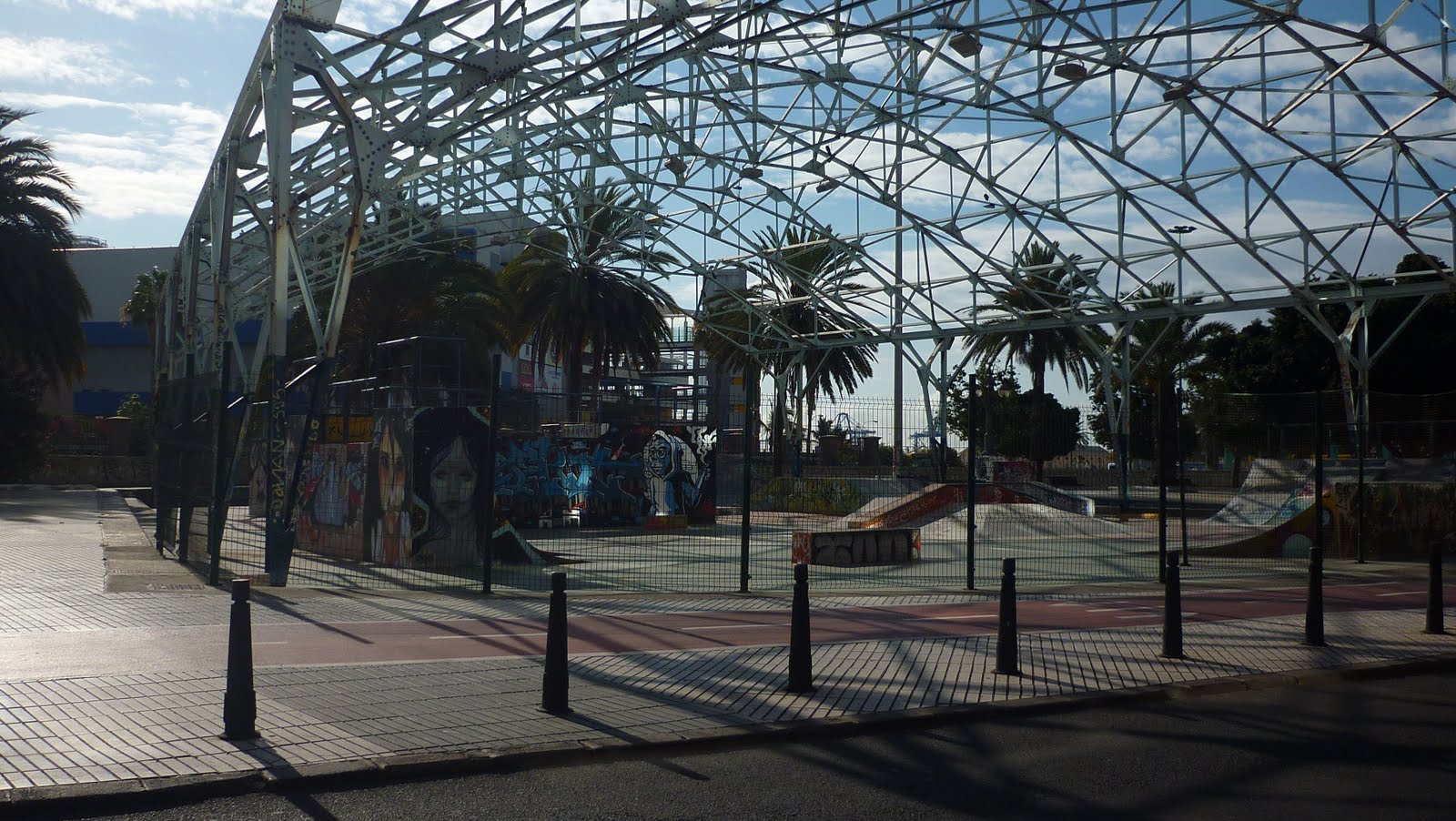
Here, then, is a close-up image.


Ask them what the picture is. They may or may not be able to guess. If no-one is able to guess, show them the following image, or perhaps, give a few hints.

When they've guessed that it's an eye, here are some examples of questions you could ask:

Is it real?
Is it a photo or a painting?
Is it of a man, woman, or an animal?
What kind of animal? / Is the man handsome? /Is the woman pretty? (Here, you can elicit descriptive adjectives - height, weight, type of hair, complexion, etc).

The idea is to remain flexible; the goal is to get all the students to speak. If they are on a roll, don't stop them. You don't have to show the zoomed-out images.


Are they painted by a male or a female? Age? Are the subjects real of imaginary? Are the paintings side by side? Are they of a male or female? Imagine their hair, their mouths...


At this point, they are likely to have guessed that these are graffiti.

Discuss:

Are they a valid art form? Do you like them? Should they be controlled? Where should they be allowed/not allowed? How should offenders be punished? What type of people paint them?

You can branch out to general art. Do you like art? What kind? Do you draw/paint well? Who draws well? Have they got any work of their own to show the class?


So, are the two girls drawn side by side? What about the old lady (well, maybe it isn't an old lady; anyway, I'm referring to the figure in the background)? Are they all drawn by the same person? What makes you think so? Where do you think these graffiti are? Why do you think so?


If they haven't guessed already, now they should know that this is a skate park. At this point, whether you've arrived here just by using the first shot, or you've needed to use all the zoomed-out shots, you can start to discuss sports in general, and skateboarding, in particular.

What sports do you practise? How often? Who with? How many? Where? How long? What type of clothes do you wear? Do you have a break? How long? What do you do? What do you do after? Do you chill out somewhere with your friends? Where? What do you talk about?

If they go somewhere to eat/drink - what do you eat/drink? If this subject comes up, you can start to talk about food (remember the five senses). Examples: What's your favourite food? Describe it: colour, texture, taste, smell. Why do you like it? How often do you eat it?

What's your favourite meal time? Do you cook? Who cooks at home? Do you eat healthily? What is healthy food?

ELT ESL EFL TEFL CLIL Games, Resources, Activities: Using close-up images for speaking in the classroom

Why is there a fence covering the park? What is beyond the park? What is on this side? What's to the left/right? What time of day is it? How do you know? Do you think it gets busy?


Is this picture taken at the same time as the previous? Is this skate park in a city or in a village? What's the weather like?

As you can see, there are endless questions you can ask, and endless topics you can get the students to talk about. If there are too many students in the class, you can split them into groups and have them ask each other questions. Go around monitoring and helping.

Do visit Ceri's blog for more ideas on using images. For sources of image, look at my Useful Resources page, under Images. You can, of course, use our very own ELTpics in Flickr. There, you'll find photos taken by teachers for teachers under the Creative Commons licence. You can also join in the fun by contributing your own photos: tweet the link with the hash tag #eltpics.

Photos are invited for a new topic each week (normally on Sunday). If you don't know the topic, just ask the question with the hash tag, and someone will tell you. You can also contribute photos to older topics - just look at the sets page.

Related topics

Sunday, 17 April 2011

Jackson Browne on Ted Talks: If I Could Be Anywhere

Ted Talks has a speaker with a difference - he isn't going to speak!

Don't worry - it isn't a silent video, lol.

Jackson Browne is one of my favourite singer-songwriters, and he has written many powerful songs in his long career, this one here being no exception. What I would like you to do first is to watch and listen to the song, and try to understand as much as possible.

Then, watch it a second time; this time, scroll further down and follow the lyrics.

When you've finished, think about the message Jackson Browne is trying to put across. Comment below by clicking on the pencil icon.


Sliding through the shimmering surface between two worlds
Standing at the centre of time as it uncurls
Cutting through a veil of illusion
Moving beyond past conclusions
Wondering if all my doubt and confusion will clear

If I could be anywhere,
If I could be anywhere
If I could be anywhere right now, I would want to be here

Searching for the future among the things we're throwing away
Trying to see the world through the junk we produce every day
They say nothing lasts forever,
But all the plastic ever made is still here
No amount of closing our eyes will make it disappear

If I could be anywhere,
If I could be anywhere
If I could be anywhere in history, I would want to be here

The Romans, the Spanish, the British, the Dutch
American exceptionalism, so out of touch
The folly of empire, repeating its course
Imposing its will and ruling by force
On and on through time

But the world can’t take it, very much longer
We're not gonna make it, unless we're smarter and stronger
The world is gonna shake itself free of our greed somehow

If I could be anywhere,
If I could be anywhere in time
If I could be anywhere and change things, it would have to be now.

They say nothing lasts forever,
but all the plastic ever made is still here
No amount of closing our eyes will make it disappear

And the world can’t take it, very much longer
It's not gonna make it, ‘less we're smarter and stronger
The world is gonna shake itself free of our greed somehow

And the world can’t take it, that you can see
If the oceans don’t make it, neither will we
The world is gonna shake itself all the way free somehow

If I could be anywhere, If I could be anywhere in time
If I could be anywhere and change the outcome, it would have to be now.

Related posts:
We are the champions - Ideas for using songs in the classroom
A day in the life (The Beatles)
Conditional Type II with Norah Jones
Conditional Type II - Comparing countries
Conditional Type III with Keith Whitley

Thursday, 7 April 2011

Teaching Speaking Videos: Techniques, Feedback & Monitoring

Teacher trainer John Kay expounds on his tips on teaching speaking on this set of videos for the British Council. They aren't new, but even if you think you know it all, have a listen - it may refresh some of the stagnant cells! It did mine! ;-)

I first read about these videos in Barb Sakamoto's Starter-PLN Daily.


Sunday, 3 April 2011

We Are The Champions: One Song, Countless Activities: Present Perfect Cloze, Idioms, Vocabulary, etc.

A lot of teachers who use songs for ELT restrict themselves to a gap-fill activity plus a singalong, but there are, however, many other activities you could do besides those, some of which I've set out below, and I also created a quiz incorporating some of them.

Due to copyright problems, I'm not allowed to embed the video here, but click on the video image, and then, again, where it says 'Watch on YouTube", and it will bring you to the video in YouTube.
(Note: I just tried it again, and it played the video here without any problem. I won't remove the above warning just in case you get the copyright message.)

Watch the video once. Then, click on the second image to start the interactive cloze activity. Play the video a second time, and while it's playing, try to fill in the missing gaps.

When you've completed that, have a go at the quiz - just click on the third image below to start. Only the email is obligatory, but if you don't wish to enter yours, just give a fictitious one, e.g. a@a.com.

If you provide an email, the quiz robot automatically sends you your results, along with the correct answers.


We are the champions interactive cloze activity present perfect songs

EFL ESL TEFL CLIL Music Activities, Present Perfect songs, We are the champions, Idioms


Ideas for using songs in the classroom for teachers:

Speaking: Play the first few seconds of the song (without the video image). This is a famous song, so chances are that a fair few of the students will know it. Ask them. Ask them what they know: the group, the names of the band members, the song title, how often they have heard the song, where they have heard it, what it means to them, what they think the writer was writing about, etc.

Depending on the level of your students, this song could lead to all sorts of interesting discussions, such as AIDS, struggling artistes, bullying, sports in general, football in particular, success and failure, etc.

Fill-in-the-gap: If you're doing this as an offline activity, have them guess the missing words before they listen to the song.

Jumbled sentences: Cut up the lyrics into strips of phrases, and ask them to put them in the right sequence. Or, you can jumble the words of a bar and they correct them. You can just write the words on the board, or you can prepare a word cloud. Click here to see an example.

Synonyms/Opposites: Ask the meaning and/or opposites for: pay, do, bad, made, come, end, loser, bring, fortune, go, pleasure.

Idioms: This song is great for idioms:

pay one's dues: to earn a given right or position through hard work, long-term experience, or suffering
kick sand in someone's face: to be mean, to insult, to criticise, to bully
take a bow: to say of someone after they have achieved something special
not a bed of roses (usually negative): not easy, not pleasant or good, rough

Rhyming words: Select a word, e.g., 'call', and ask them to think of words which rhyme with it. You can set up a group competition, if you want.

As an extension of the above activity, ask them to invent another verse to add to the song.

Related posts:

Index of all Material by Category
Idioms
Jumbled Sentences: Present Perfect
Cockney Rhyming Slang
Rhyming Words
Word Clouds - 101 Ways of Using Wordle in the Classroom

Tuesday, 22 March 2011

Nuclear Energy Power Debate: What's the way forward?

With all the headlines on the problems of the Fukushima Nuclear Power Plant in Northern Japan, now is a good time as any to have a debate on the viability of nuclear power as a source of energy.

The strongest objection of the anti-nuclear power lobby are the safety concerns, but what other methods of producing cheap clean energy have we got? Is nuclear power a dirty word? Is alternative energy the way forward?

I'm sure this topic will generate heated debate in the classroom, so why not organise one?

If you are not familiar with formal debate, make sure you read these: All you need to know about debate, and Debate: tasks for everyone.

There are lots of information available on the web, but I'll include a few here to start you off on the right track.


Learn how a Nuclear Reactor Works


-  How Nuclear Power works from How Stuff Works.
-  The Nuclear Fuel Cycle from BBC
-  How a Nuclear Plant Works from BBC
-  BBC also has a graphic explanation of the Fukushima nuclear alert and some facts about radiation.
-  Updated 11 April 2011: Detailed BBC analysis.
-  The Union of Concerned Scientists in Facebook has links & information

All comments will be most welcomed. Thank you.

Sunday, 13 February 2011

Zondle: Cool Game Site for Education

As visitors of this blog know, I regularly create games using various sites and software as I firmly believe we need to make education fun, and games are fun to most people, especially the younger ones.

I'm pleased to tell you that there is yet another site giving you the opportunity to create and play games for free. Zondle is still at the beta stage, but shows great promise. What makes it stand out is that for each set of questions you prepare, Zondle creates, at present, up to 28 different types of games for your students to play.

I've created a set of 10 questions on chemical elements to test their games, and below are two examples. To play other versions of this game, go to Zondle's web site, click PLAY, then MY TEACHER, then type in this user name: acLiLtocLiMB.

Let me know what you think of it!


Saturday, 5 February 2011

Top 3 Games

Regular readers among you will have noticed that I use Purpose Games a lot, and, no, in case you're wondering, I don't earn anything from them. I use them because the tagging games are relatively easy to create, they're free, I haven't found any better, and they suit my purpose (no pun intended) just fine.

If you're having students play the games there (linking through here first, I hope), I'd recommend that they register. The only reason for this is so that their scores are recorded, and this provides a challenging incentive. The more they play, the more they will remember.

I took a peek recently to see which games were the most popular, and these are the top three. It's worth noting that all three are under the science category. I wonder why...

Animal Cell Label Game
   Played 5,168 times


Muscular System Label Game
   Played 2,281 times


Parts of a flower label game
   Played 1,283 times

Friday, 4 February 2011

The Fun Theory

Some of you might have noticed that the motto of this blog, as seen on the header, is 'Putting the Fun into Education!", but little did I know of Volkswagen's initiative, The Fun Theory, expounding "the thought that something as simple as fun is the easiest way to change people’s behaviour for the better. Be it for yourself, for the environment, or for something entirely different, the only thing that matters is that it’s change for the better".

So, I wasn't the only one who believed that fun is the key to changing people's perception of what they might consider boring. Perhaps VW had read my blog... haha. Anyway, they had the resources to go out and prove it in some really interesting ways! Watch these videos.


Wednesday, 2 February 2011

Parts of a Wind Turbine: Labelling Game

Renewable Energy - Wind Turbine


The largely unknown tiny Canarian island of El Hierro will soon become anything but that.

By next year, it will become the first island in the world to obtain 100% of its energy needs from renewable energy. A combination of wind and hydroelectrical power will supply electricity to its 11,000 residents and its floating population of foreign workers and tourists, which, no doubt, will increase significantly.

It thus seems appropriate that we should look a little deeper into wind turbines. These look like a modern version of traditional windmills and basically converts wind energy into electrical power.

Watch the video, and then click on the image further below to start a labelling game. Play it a few times, and soon, you will know the names of the internal parts of a wind turbine.


Chiew CLIL EFL ESL ELL TESOL TEFL: Parts of a Wind Turbine

Sunday, 9 January 2011

Countries & Nationalities - Another Game

A Guide to Countries of the World (Oxford Paperback Reference)
Here's another game on countries and nationalities. The clue gives you the nationality and you'll have to find the country on the map.


You may also like these other games on countries:

Countries and Nationalities Arcade Game
The Best Countries
Flags of the World
Capitals of the World
Find these Cities

Chiew's CLIL EFL ESL ELL TEFL: Countries and Nationalities